


Queensland Cotton Company, East Ipswich, ca. 1898 – Image courtesy of Picture Ipswich
In 1861 the Ipswich Cotton Company was established at East Ipswich by Cribb, Walker and Brown. The premises consisted of extensive brick buildings and outhouses within view of the railway station at East Ipswich. This was the only cotton mill in Australia at the time and they manufactured cotton goods such as flannel, tweeds and wool for suiting, women’s clothing and blankets. At times production was low and the company struggled with the lack of local cotton grown due to adverse weather conditions like dry spells which retarded plant growth. They eventually had to import cotton from India increasing their production costs.
In 1889 an unsuccessful attempt was made to float the company. Because of a lack of capital the company had to relinquish the business and ceased operations, handing ownership over to the Queensland National Bank.
In 1905 while the business was under ownership of the Queensland National Bank, the ginning of the local crop of cotton was carried out under Government supervision using facilities at the Ipswich Cotton Company.
In 1907 the cotton mill at East Ipswich was taken over by the Joyce Brothers. The Joyce Brothers were a well-known and well-established firm of bag-manufacturers which had branches in London, Dunedin (New Zealand), Sydney and Brisbane. By producing the calico needed for their bag manufacturing company locally they hoped to keep the money in the State.
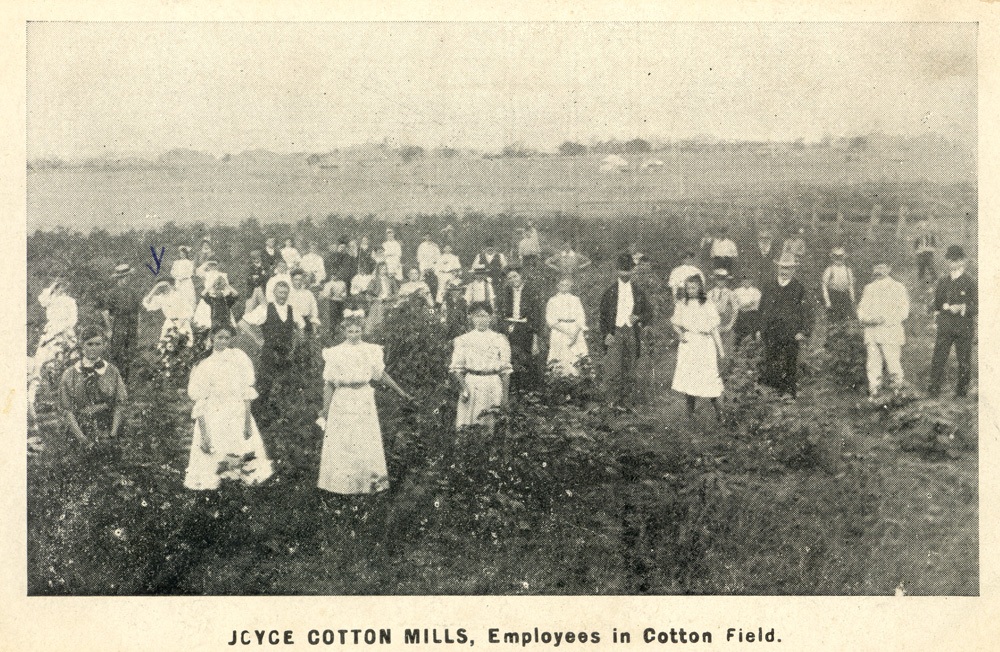
Image courtesy of Picture Ipswich
They renamed the business the Joyce Cotton Mills and opened in 1908. With the takeover of the mill, the Joyce brothers were busy trying to stimulate a revival of cotton growing as dairy farming had become a profitable competitor to cotton growing. The brothers began supplying cotton seed to farmers free of charge, along with pamphlets on cotton growing. They even went further trying to interest the younger generation by inviting school children to visit the mill to gain an insight into the manufacturing process of cotton. They also offered prizes for the best essay from school children on the growing and manufacturing of cotton. A resurgence of cotton growers prevailed meeting with good returns and Government bonuses for their cotton.
After the successful growth seen in 1908, the cotton mill once again struggled. A decision was made to close the cotton mill in 1913 and convert the business to a woolen mill to be known as the Ipswich Woollen Company.
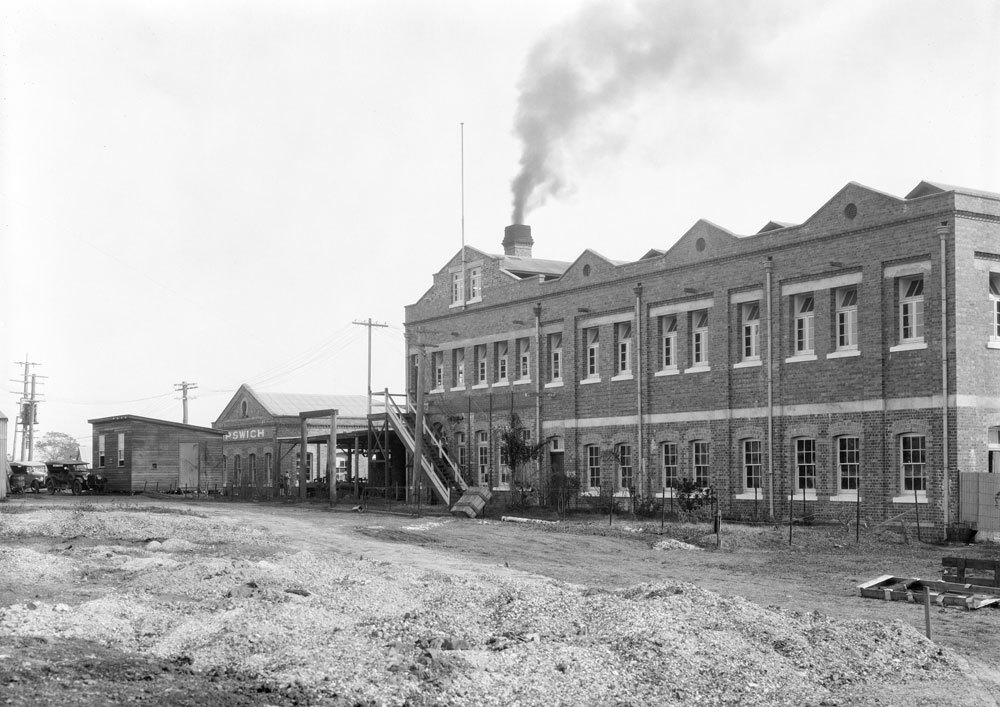
Ipswich Woollen Mills, Joyce Street, East Ipswich, 1920s – Image courtesy of Picture Ipswich
With the end of the Second World War came a decline in clothing and textile manufacturing. John Morris, along with partners Dr. E. Brown and solicitor J. E. Walker had established The Queensland Woollen Manufacturing Company at North Ipswich in 1877. Together they purchased the Ipswich Woollen Company and the two mills became known as Australian Fabric Manufacturers. The manufacturing of Woollen fabric and carry out dyeing was done at the East Ipswich site. The North Ipswich site became the head office and carried out finishing as well as making worsteds, fine smooth yarn spun from combed long-stable wool.
In 1930 John Morris left the company after a falling out with his partners and purchased the former meatworks building at Redbank with his son Ivor. New equipment was brought in from England. In 1934 the Redbank Woollen Mill began business with just 5 employees.
Ipswich was home to the only three woollen mills in Queensland. Unlike the cotton mill, the woollen mills flourished and together with the mines and the Railway Workshops became one of Ipswich’s biggest employers.
The Australian Fabric Manufacturers business was then purchased by the Sydney-based firm of Max Frost. Due to the drop in orders because of high competition the business closed in the early 1970’s.
The Morris Woollen mill in Redbank struggled when the Federal Government lowered tariffs and the Australian market became flooded with cheaper textiles. The mill was bought by Primace in 1980 and became Sunrock Wool Pty Ltd. The business closed three years later.
Information taken from Ipswich in the 20th Century by Robyn Buchanan, Ipswich Herald & General Advertiser 18-07-1889, 02-05-1905, 01-06-1907, 26-10-1907, 28-11-1908, The Fashion Archives, People & Places, Ipswich